

SystemTrade Intelligence · Online UTC--:--:-- EngagementPrivate · Client Confidential
Product 01 Trade Intelligence

From national exposure
to market shock.

Trade risk does not start as a price move. It starts as dependency: a product, an exporter, a route, a port, a company and a point of failure. This system follows that chain until the commercial consequence is visible.

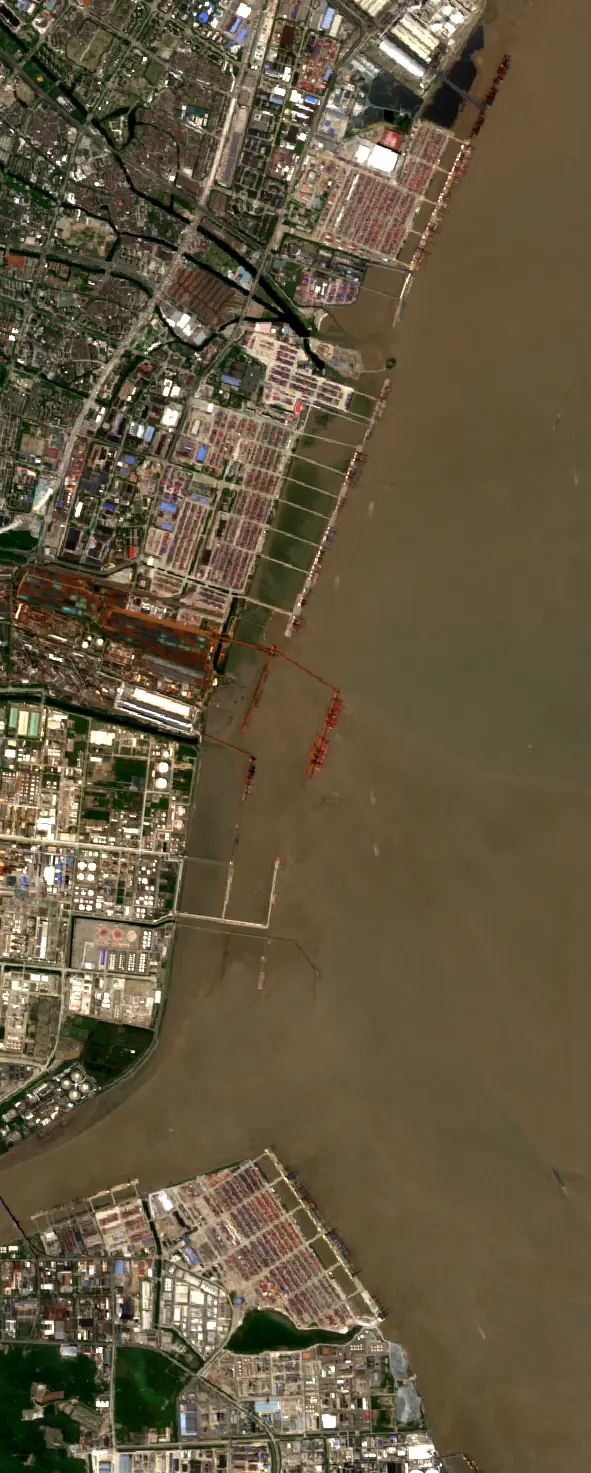
Trade Port · Hero Frame Container density · operational tempo
Satellite image of a loaded port terminal
Port-side container density as physical evidence of trade pressure and operating tempo.
01 / Establish the balance sheet Country Exposure

Start with the country,
then expose the products.

The trade dashboard gives the first read: what a country imports, what it exports, where the pressure sits and which product categories are large enough to matter. It becomes the briefing table before deeper route, supplier and company analysis begins.

  • Total import and export value by year.
  • Top traded HS6 products and partner concentration.
  • Surplus, deficit and strategic exposure signals.
Trade Dashboard Country exposure · platform footage
Country-level trade balance, product leaders and partner concentration.
02 / Model dependency Supplier Concentration

Before routes matter, identify the products a country cannot easily replace.

The next step is dependency modelling. The system compares imports from a selected supplier group against all global imports for the same HS6 product. This exposes where a country is structurally reliant on a region, bloc or geopolitical counterparty before disruption is visible in price.

  • Product-level supplier dependency against world imports.
  • Thresholded exposure views for products above a chosen dependency level.
  • Group analysis for Gulf energy, regional minerals or custom supplier blocs.
Gulf Dependency Product dependency · platform footage
Dependency is modelled by comparing imports from a selected supplier group against total world imports for each product.
03 / Follow the product HS6 Network

Turn one HS6 code
into a physical network.

Once a product is selected, the system separates who is buying, who is supplying and which country pairs form the live trade corridor. The product stops being an abstract code and becomes a map of exposure.

  • Importer and exporter breakdown by product.
  • Country-pair values for the selected commodity.
  • Specific affected companies surfaced in exposed countries.
Product Flows Product network · platform footage
A selected product is decomposed into supplier countries, importer countries and exposed company groups.
04 / Identify the lanes Sea-Lane Exposure

Map the ports, passages and choke points that carry the risk.

Trade exposure is not only bilateral. It moves through sea lanes, terminals and corridors that can be disrupted by war, sanctions, weather, labour action or congestion. The route layer shows where economic dependence becomes geographic vulnerability.

  • Sea-lane and route visualisation for strategic trade flows.
  • Critical port and chokepoint identification.
  • Disruption zones linked back to countries and products.
Sea Lane Visualisation Route exposure · platform footage
The platform renders routes and maritime corridors so disruption can be tied to physical passage.
05 / Scale the view Regional Structure

Move from one dependency to the full regional structure.

After a specific product dependency is understood, the system widens the lens. Continental and regional aggregation shows where the broader trade map is structurally concentrated, where supplier geography is fragile and where a country's exposure is deeper than a single commodity.

  • Continental heatmaps for import and export structure.
  • Regional concentration by product and country group.
  • Macro exposure views before selecting a narrower shock scenario.
Continental Heatmap Regional structure · platform footage
Trade concentration is summarised by region so the system can expose geographic fragility.
06 / Simulate the cut Scenario Engine

Turn disruption into a price and portfolio question.

The supply shock simulator asks what happens if a source is removed, reduced or stressed. It combines dependency, substitution assumptions, demand elasticity, market pass-through and price proxies to produce a first-order estimate of exposure.

  • Supply cut, mitigation and elasticity controls.
  • Market proxy overlays for exposed commodities.
  • Company and portfolio impact views for importing countries.
Supply Shock Modelling Scenario engine · platform footage
A product-level shock is translated into gross supply risk, net modelled loss and price pressure.
07 / Ground truth the port Imagery Confirmation

Use imagery when reported data is late, political or incomplete.

Port intelligence monitors yards, terminals and industrial logistics sites for visual change. Occupancy, congestion, expansion or abnormal quiet can become early evidence of economic regime change before it is reflected in official releases. For basic recurring watch work, broad-area satellite data is sufficient; for client-critical ports, higher-resolution imagery can be sourced to inspect berth activity, yard density and terminal change down to sub-metre detail.

  • Repeat satellite monitoring of port and logistics sites.
  • Yard occupancy and visible activity assessment.
  • Imagery-led confirmation of economic pressure.
Port Monitoring Satellite port watch · platform footage
Port imagery is used to check whether trade pressure is appearing on the ground.
T·08 Trade Tasking

Bring a product, country
group, port or route.

The output can be a private dashboard, a one-off disruption study, a supplier dependency report or a recurring monitoring cell for live exposure.